I built PlanSpark to help teachers plan faster and walk into class more prepared.
My goal with PlanSpark was to create something more useful than a generic AI prompt box. A big part of that inspiration came from being married to an elementary school teacher with more than 30 years in the classroom. Seeing how much time and energy goes into planning helped shape the kind of tool I wanted to build.
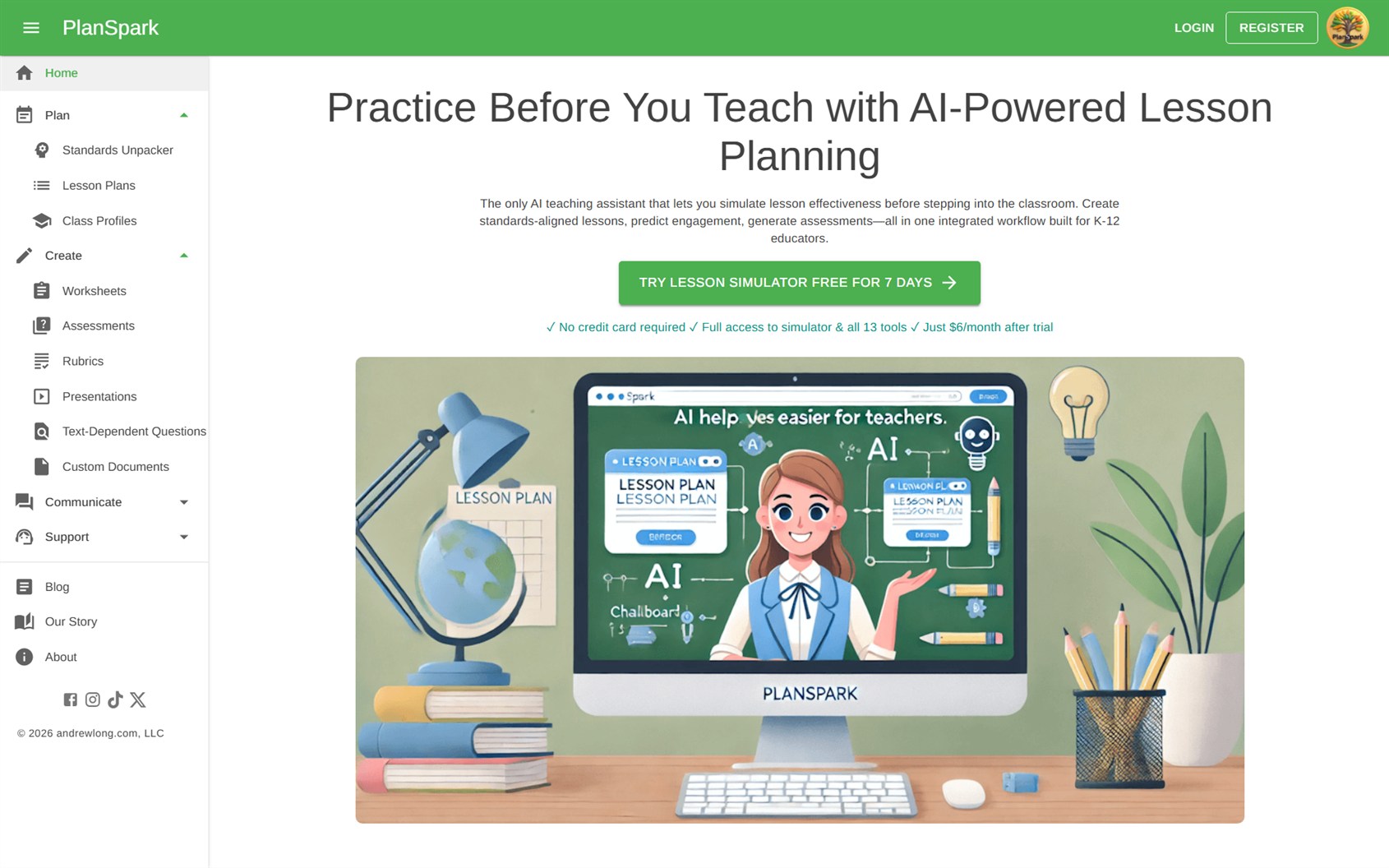
Overview
I built PlanSpark because lesson planning can feel repetitive, scattered, and more time-consuming than it should be. I am married to an elementary school teacher with more than 30 years of experience, and watching the amount of work that happens before and after the school day gave me a much clearer picture of how much time goes into preparing strong instruction.
The feature I am most excited about is the Lesson Plan Simulator. Teachers can create a profile for a real class and get a preview of how a lesson might land before they ever teach it. That idea felt especially valuable to me because it moves beyond content generation and into actual classroom preparation.
I also wanted PlanSpark to stay grounded in the day-to-day work of teaching. That is why the platform reaches beyond lesson creation into assessments, reading support, parent communication, and special education tasks. The goal was never to build a flashy AI demo. It was to build something teachers could come back to again and again because it genuinely helps.
At a glance
Audience: K-12 teachers, instructional coaches, PLC teams, special education staff, and school teams who need faster planning without giving up alignment, differentiation, or classroom practicality.
Built with: Blazor, .NET, OpenAI, Azure
Project type: Website
Key features
- Break down academic standards into clearer teaching targets and student-friendly language.
- Generate lesson plans and move into aligned assessments and support materials from the same workflow.
- Create class profiles and simulate a lesson to spot pacing issues, likely struggles, and engagement concerns ahead of time.
- Build assessments, rubrics, worksheets, presentations, and student feedback more quickly.
- Support related classroom needs like parent communication, text rewriting, and special education documentation.
Highlights
The Lesson Plan Simulator lets teachers test a lesson against a real class profile before they teach it.
Standards, lesson plans, assessments, and supporting materials are meant to flow together instead of living in separate tools.
The feature set goes beyond lesson generation into feedback, communication, reading support, and special education use cases.
How it is built
I built PlanSpark as a Blazor and .NET application backed by Azure and OpenAI services. I wanted the product to support the real work teachers do every week: planning lessons, unpacking standards, creating assessments, supporting reading instruction, and handling special education tasks.
Why it matters
What matters most to me about PlanSpark is that it tries to respect a teacher's time. Instead of throwing a bunch of disconnected AI features onto a page, I wanted to build a tool that feels organized around real classroom work and helps teachers move from idea to instruction with less friction.